

Introduction to Creative Writing Prompts Generator
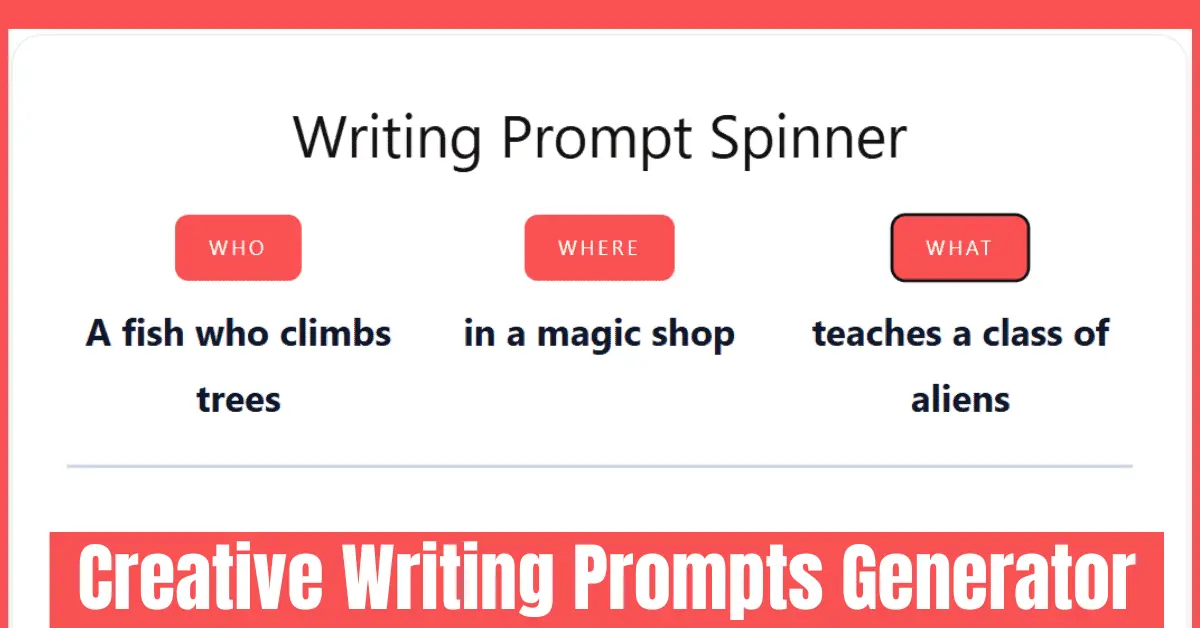
A creative writing prompts generator is a tool designed to help writers instantly generate ideas for stories, essays, blog posts, or any form of written content. Instead of starting with a blank page, it provides structured or random prompts that spark imagination and guide the writing process in a new direction. This makes it especially useful for writers, students, bloggers, and content creators who often struggle with where to begin or what to write next.
The main value of a creative writing prompts generator lies in its ability to boost creativity and remove mental blocks. Many writers experience writer’s block when ideas stop flowing or when they feel stuck repeating similar themes. By offering fresh scenarios, characters, or situations, these tools help break that cycle and encourage original thinking. They act as a starting point that turns uncertainty into inspiration.
For students, it can simplify assignments by giving a clear direction to develop essays or narratives. Bloggers can use it to consistently produce engaging content ideas without running out of topics. Content creators benefit by quickly exploring new angles for storytelling, videos, or social media posts.
Beyond just generating ideas, these tools also support idea expansion. A single prompt can be developed into multiple storylines, perspectives, or formats, allowing writers to explore creativity in depth rather than staying limited to one concept.
Why Writers Need a Writing Prompt Generator
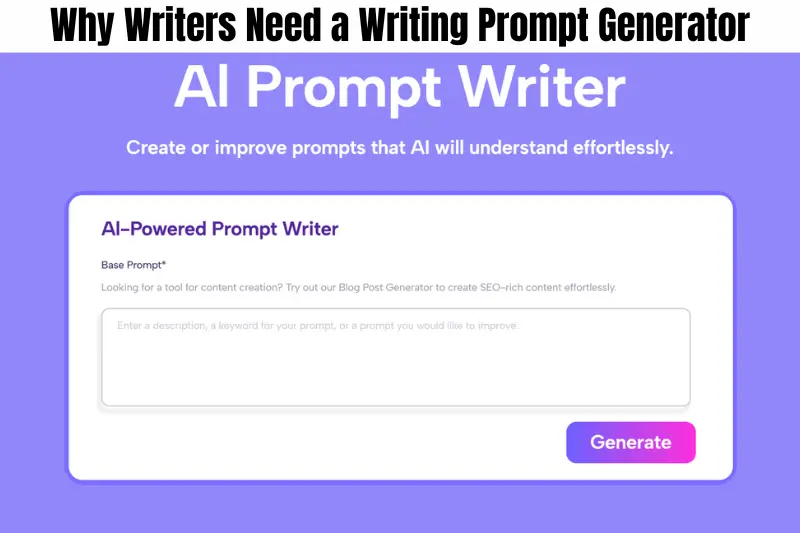
Writers often face one common challenge: running out of ideas or struggling to start a new piece of content. This is where a writing prompt generator becomes extremely useful. It provides instant inspiration by offering structured ideas that can be turned into full stories, articles, or creative projects. Instead of spending hours thinking about what to write, writers can immediately begin working from a starting point generated in seconds.
A writing prompt generator is especially helpful for overcoming writer’s block, which is one of the biggest obstacles in the creative process. When the mind feels empty or repetitive, even simple writing becomes difficult. Prompt generators break this barrier by introducing unexpected themes, characters, or situations that trigger new thinking patterns and creative flow.
Students, bloggers, and professional writers all benefit from this tool in different ways. Students can use it to develop essays or creative assignments more easily. Bloggers can maintain a consistent publishing schedule by quickly generating topic ideas. Content creators can explore new angles for storytelling, ensuring their content stays fresh and engaging.
Another important advantage is consistency. Writing regularly requires a steady stream of ideas, and a writing prompt generator helps maintain that flow. Instead of waiting for inspiration, writers can actively produce it whenever needed.
How Writing Prompts Generator Tools Work
A writing prompts generator works by using structured inputs, themes, or randomization systems to create new writing ideas in seconds. The goal is to remove the need for manual brainstorming and replace it with instant inspiration that writers can immediately develop into full content.
Most writing prompts generator tools function in a very simple way. A user selects a category such as genre, topic, mood, or character type, and the system generates a prompt based on those inputs. Some tools also operate as a random prompt generator, where ideas are created without any fixed structure, making the results more unexpected and creatively stimulating.
These systems often rely on databases of story elements such as characters, settings, conflicts, and scenarios. When combined in different ways, they form unique writing ideas that can be used for storytelling, blogging, or academic writing. This is also where a story idea generator becomes valuable, as it focuses on combining multiple creative elements into a complete concept rather than just a single sentence prompt.
The benefit of this process is speed and variety. Instead of manually thinking through ideas, writers receive instant combinations that can spark creativity in new directions. Even a simple output from a writing prompts generator can be expanded into multiple story angles, making it a powerful tool for idea development and creative exploration.
Types of Story Prompt Generator Outputs
A story prompt generator can produce a wide variety of ideas depending on how it is designed and what inputs it uses. These outputs are not limited to one format, which is why writers from different genres can all benefit from them in unique ways.
Each type of prompt helps stimulate creativity in a different direction and supports different storytelling styles.
One common output is character based prompts. These focus on a person, their personality, background, or a specific challenge they are facing. Such prompts are especially useful for developing strong narratives and emotional depth in storytelling.
Another type includes setting based prompts. These describe a place or environment, such as a mysterious forest, a futuristic city, or an abandoned house. Writers can use these to build atmosphere and establish strong visual storytelling elements.
Conflict based prompts are also widely used. These present a problem or situation that needs to be resolved, which helps writers immediately form a plot direction. This type is especially helpful for creating engaging and dynamic stories.
A random prompt generator can also produce mixed prompts that combine characters, settings, and conflicts in unexpected ways. This randomness often leads to the most creative and original ideas because it forces writers to think outside usual patterns.
Benefits of Using a Random Prompt Generator
A random prompt generator is especially valuable for writers who want to break out of repetitive thinking patterns and explore new creative directions. By producing unexpected ideas, it encourages originality and helps writers move beyond familiar themes or predictable storylines.
One of the biggest benefits is that it significantly improves creativity. When writers are given a completely random scenario, character, or situation, they are pushed to think differently and find new ways to build a story. This often leads to more unique and engaging content compared to ideas that are planned too rigidly.
Another important advantage is overcoming mental blocks. Many writers struggle with starting a new piece because they feel unsure about direction or topic. A random prompt generator removes this pressure by instantly providing a starting point, making it easier to begin writing without delay.
It also helps build a consistent writing habit. When ideas are always available on demand, writers are more likely to practice regularly. This consistency improves skill over time and strengthens storytelling ability.
In addition, a writing prompts generator that includes randomization allows writers to explore genres or topics they may not normally choose. This expands creative range and helps develop flexibility in writing style.
How to Use a Creative Writing Prompts Generator Effectively
A creative writing prompts generator becomes most powerful when it is used with a clear method rather than just generating random ideas and stopping there. The real value comes from how a writer develops, expands, and personalizes the prompt into a complete piece of content.
The first step is to choose a clear direction. Many writing prompts generator tools allow you to select a genre, mood, or theme. Picking a direction helps filter ideas so the generated prompts feel more relevant to your writing goals instead of being completely random and disconnected.
Next, generate multiple prompts instead of relying on just one. A writing prompts generator often produces several variations, and comparing them allows you to pick the strongest idea or even combine multiple prompts into one richer concept.
After selecting a prompt, the key step is expansion. A story idea generator output is usually just a starting point, so you should build on it by adding characters, setting details, conflict, and narrative structure. This is where your creativity transforms a simple idea into a complete story outline.
It is also important to rewrite the prompt in your own words. This ensures originality and helps you mentally connect with the idea more deeply. Many writers use prompts only as inspiration rather than final content, which keeps their work unique and authentic.
EEAT Optimization Strategy for Writing Prompt Content
To create content that performs well in search engines today, it is important to align with the EEAT framework, which stands for Experience, Expertise, Authoritativeness, and Trustworthiness. When applied to topics like a creative writing prompts generator, this framework helps ensure the content feels valuable, reliable, and genuinely useful to readers.
Experience
Experience is about showing real understanding of how writers actually use a writing prompts generator in practice. This includes how students use it for assignments, how bloggers use it for idea generation, and how fiction writers rely on it during brainstorming sessions. Content becomes stronger when it reflects real usage instead of only theoretical explanation.
Expertise
Expertise focuses on demonstrating knowledge of writing processes and creativity techniques. A strong explanation of how a writing prompts generator supports storytelling structure, idea development, and writer workflow shows that the content is informed and meaningful. It should guide users on how to turn prompts into complete and structured writing.
Authoritativeness
Authoritativeness is built by consistently publishing high quality content in the writing and creativity niche. Covering related topics like writing prompts generator, story prompt generator, and story idea generator helps establish topical authority. The more depth and consistency a site has in this niche, the stronger its authority becomes in the eyes of search engines.
Trustworthiness
Trust is achieved by providing clear, original, and helpful information without misleading claims. A reliable article about a random prompt generator or any writing tool should focus on realistic outcomes, practical use cases, and honest guidance. Avoiding duplicate content and ensuring clarity builds user confidence and improves overall content quality.
Best Practices for Using Story Idea Generator Tools
Using a story idea generator effectively is not just about producing ideas, but about how you refine and develop those ideas into meaningful content. Writers who get the best results usually treat generated prompts as a foundation rather than a finished product.
One of the most important practices is to combine multiple outputs. Instead of relying on a single result from a writing prompts generator, try generating several ideas and merging the strongest elements. This often leads to more original and layered storytelling concepts.
Another useful approach is to personalize every idea. A story prompt generator may give a basic scenario, but adding your own characters, emotions, settings, and conflicts makes the idea unique and aligned with your writing style. Personalization is what transforms generic prompts into engaging stories.
It is also recommended to expand every prompt into a structured outline. A writing prompts generator gives you the spark, but you should develop it into a beginning, middle, and end. This helps turn raw inspiration into a complete narrative plan that is easier to write.
Writers should also avoid copying prompts directly without modification. While a random prompt generator is excellent for inspiration, originality comes from how you interpret and reshape the idea. This ensures your work remains authentic and stands out.
Common Mistakes When Using Writing Prompts Generator
While a writing prompts generator can be a powerful tool for creativity, many writers do not use it in the most effective way. As a result, they miss out on its full potential or feel that the tool is not helpful.
One common mistake is relying completely on generated prompts without adding personal input. A creative writing prompts generator is designed to inspire ideas, not replace your creativity. If you use the output exactly as it is, your content may feel generic and lack originality.
Another mistake is not expanding the prompt into a full concept. A story prompt generator usually provides only a starting point, but some writers stop there instead of building characters, settings, and a clear storyline. This limits creativity and results in underdeveloped ideas.
Many users also generate only one prompt and settle for it immediately. A random prompt generator can produce multiple variations, and exploring several options often leads to stronger and more interesting ideas. Limiting yourself to one result reduces creative possibilities.
Ignoring structure is another issue. Even when using a writing prompts generator, writers still need to organize their ideas into a clear flow. Without structure, even a good prompt can become confusing or incomplete.
Lastly, some writers overuse prompts without developing their own thinking skills. A story idea generator should support creativity, not replace it. Overdependence can slow down long-term creative growth instead of improving it.
Future of Creative Writing Prompts Generator Tools
The future of the creative writing prompts generator is closely connected with advancements in artificial intelligence and personalized content creation. These tools are becoming more intelligent, adaptive, and tailored to individual writing styles, making them far more powerful than simple random idea generators.
In the coming years, a writing prompts generator will likely move beyond basic keyword or random combinations. Instead, it will analyze a writer’s previous work, preferred genres, and tone to produce highly customized prompts that match their creative style. This will make idea generation feel more natural and less generic.
A story prompt generator is also expected to become more interactive. Instead of giving a single static idea, it may guide writers step by step, helping them build characters, plot structures, and even full story outlines in real time. This will turn prompt tools into complete writing assistants.
The role of a random prompt generator will also evolve. Rather than purely random outputs, future systems will balance randomness with relevance, ensuring that ideas remain surprising but still useful. This will help writers stay creative without feeling disconnected from their goals.
Additionally, a story idea generator will likely integrate with other creative tools such as grammar checkers, content planners, and AI writing assistants. This will create a full ecosystem where writers can move smoothly from idea generation to final content creation.
Conclusion
A creative writing prompts generator is a valuable tool for anyone who wants to improve creativity, generate ideas faster, and maintain consistency in writing. It helps remove the pressure of starting from a blank page and provides a steady flow of inspiration that can be shaped into meaningful content.
Throughout this guide, we explored how a writing prompts generator works, its different types of outputs, and the benefits of using tools like a random prompt generator and story idea generator. These tools are not meant to replace creativity but to support and enhance it by offering structured starting points.
When used correctly, a story prompt generator can help writers overcome writer’s block, explore new genres, and develop stronger storytelling skills. The key is to expand, personalize, and refine each prompt rather than using it as a final product.
In the end, consistent practice with a writing prompts generator can significantly improve your writing confidence and creative ability. It turns idea generation into a simple, repeatable process, allowing you to focus more on storytelling and less on struggling for inspiration.
