

Introduction
Writing is one of the most powerful ways for students to express their thoughts, emotions, and imagination. When students are given the freedom to create stories or ideas, they not only improve their language skills but also develop confidence in their own voice. This is why creativity plays such an important role in writing—it transforms simple sentences into meaningful stories that reflect personality and imagination.
However, many students often struggle when they are asked to write something on their own. The main challenge is not a lack of ability, but a lack of ideas. Facing a blank page can feel overwhelming, and without guidance, even the most creative minds may not know where to begin.
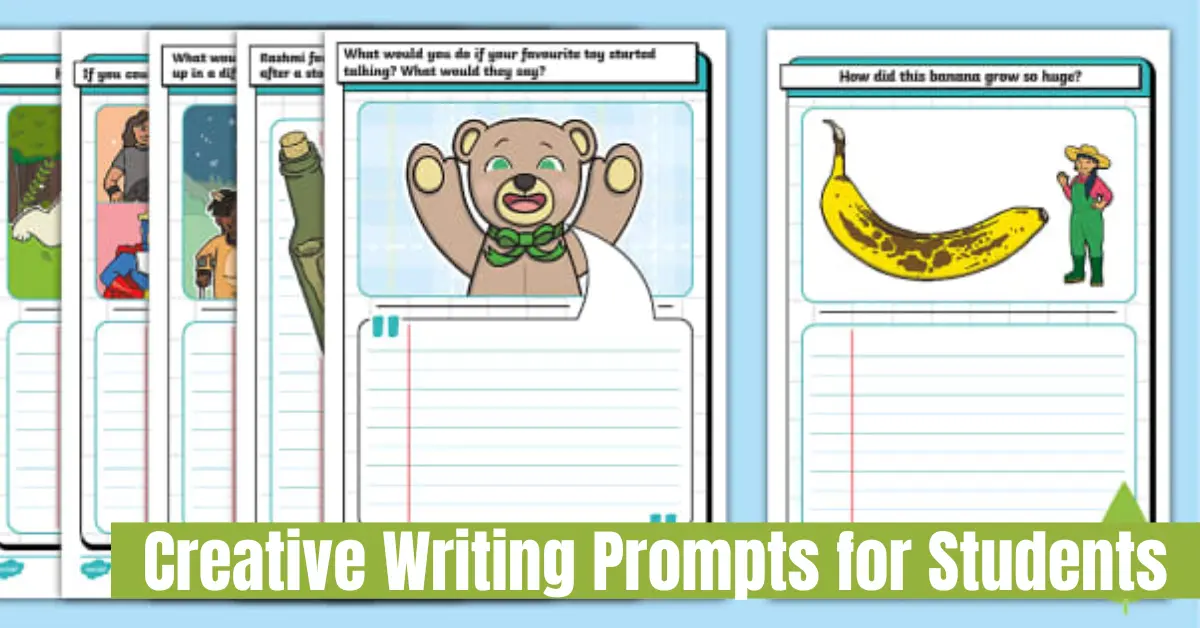
This is where creative writing prompts for students become extremely helpful. These prompts act as starting points that spark imagination and make it easier to begin writing. Instead of thinking “What should I write?”, students can focus on “How will my story unfold?” With the right prompts, writing becomes more enjoyable, less stressful, and far more engaging.
What Are Creative Writing Prompts
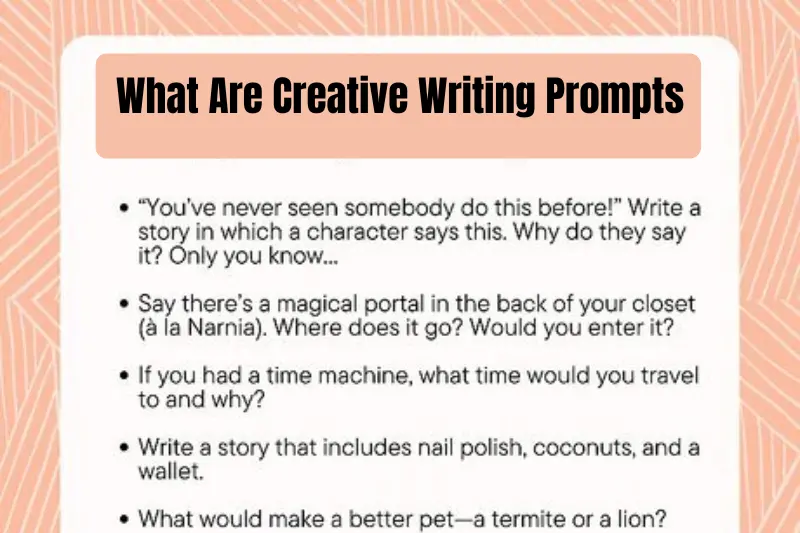
Creative writing prompts are simple ideas, questions, or situations that are designed to inspire students to start writing. They act as a starting point for imagination, helping students move past the difficulty of thinking “what should I write about?” and instead encouraging them to focus on building a story or expressing their thoughts freely.
In simple terms, writing prompts give direction without limiting creativity. A single sentence like “What would you do if you could fly for a day?” can open the door to a full story filled with imagination, emotion, and personal expression.
These prompts are widely used in classrooms because they make writing more approachable and enjoyable. Instead of feeling pressured to create something perfect, students can explore ideas naturally and build confidence step by step. This is why writing prompts are an essential tool for improving creativity, language skills, and overall writing ability.
Why Writing Prompts Are Important for Students
Writing prompts play a very important role in helping students develop strong writing skills and a creative mindset. One of the biggest benefits is that they remove the fear of starting from a blank page. When students are given a clear idea to begin with, they feel more comfortable expressing their thoughts and are more likely to enjoy the writing process.
Another key advantage is that writing prompts encourage imagination. Instead of sticking only to routine or textbook answers, students begin to think beyond limits and explore new ideas. This helps them build storytelling skills and develop a more creative approach to writing.
Writing prompts also improve vocabulary and sentence structure over time. As students practice writing regularly, they naturally learn how to express ideas more clearly and effectively. This consistent practice strengthens their overall communication skills.
Most importantly, writing prompts for kids and students help build confidence. When students realize they can turn a simple idea into a complete story, they start believing in their own creativity. This confidence becomes a strong foundation for future academic and personal growth.
Types of Writing Prompts for Students
Writing prompts come in different styles, and each type helps students explore creativity in a unique way. Understanding these types makes it easier to choose the right prompt depending on age, interest, and learning goals.
Fun Writing Prompts for Kids
Fun writing prompts for kids are designed to make writing enjoyable and playful. These prompts often include silly or imaginative situations that encourage children to think freely without pressure. For example, “What would happen if your pet could talk?” or “Imagine if school started on the moon.” Such ideas make writing feel like a game rather than a task, helping young learners stay engaged and excited.
Creative Writing Prompts for Kids
Creative writing prompts for kids focus more on imagination and storytelling. They encourage children to build their own worlds, characters, and adventures. Prompts like “You find a magical door in your classroom” or “You wake up as a superhero for a day” help students develop deeper thinking and storytelling skills while keeping creativity at the center.
General Writing Prompts for Students
General writing prompts are more structured and are often used for older students. These may include opinion-based topics, descriptive writing, or reflective questions such as “Should homework be reduced?” or “Describe your perfect day.” These prompts help students organize their thoughts clearly and improve their academic writing abilities.
Best Creative Writing Prompts Examples
One of the most effective ways to improve writing skills is through practice, and the right prompts can make that practice both fun and meaningful. Below are some simple and engaging examples of creative writing prompts for students that can be used in classrooms or at home to spark imagination and storytelling.
- Imagine you woke up one morning and could talk to animals. What would you say and how would they respond?
- You discover a hidden door in your school that leads to a completely different world. Describe what you see on the other side.
- Write a story about a day when everything you draw comes to life.
- If you could travel back in time, which moment would you visit and why?
- You suddenly become the principal of your school for one day. What changes would you make?
- A spaceship lands in your backyard, and the alien inside asks for your help. What happens next?
- Write about a magical pen that turns anything you write into reality.
- You find a mysterious map that leads to a secret treasure. Describe your journey.
- Imagine your pet becomes a famous celebrity. What is their life like?
- One morning, gravity stops working for a few hours. Describe your experience.
These writing prompts for kids are designed to encourage imagination, curiosity, and storytelling skills. They help students think beyond ordinary situations and express ideas in a creative and confident way.
How Teachers Can Use Writing Prompts Effectively
Teachers play a key role in shaping how students respond to writing activities, and creative writing prompts for students can become much more powerful when used with the right approach. Instead of treating prompts as simple assignments, they can be turned into engaging classroom experiences that build both creativity and confidence.
One effective method is to use prompts as short daily warm-up activities. Giving students just 10 to 15 minutes to respond to a fun or imaginative idea helps them develop a habit of thinking creatively without pressure. This also improves their writing fluency over time.
Group storytelling is another useful technique. Teachers can give one prompt and ask each student to contribute a part of the story. This not only encourages collaboration but also helps students see how different ideas can come together to form a complete narrative.
Timed writing exercises can also be helpful. When students write within a set time limit, they learn to organize their thoughts quickly and focus on expressing ideas rather than overthinking grammar or perfection.
Benefits of Writing Prompts for Child Development
Using creative writing prompts for students is not just about improving writing skills, it also plays an important role in overall child development. When students regularly engage with different prompts, they begin to think more openly and develop stronger mental flexibility. This helps them approach problems with a more creative and solution focused mindset.
One major benefit is the improvement of cognitive skills. Writing encourages students to organize their thoughts, build logical sequences, and connect ideas in meaningful ways. Over time, this strengthens their ability to think clearly and express themselves with better structure.
Writing prompts also support emotional development. When students are given situations to imagine and describe, they often reflect their own feelings and experiences in their stories. This helps them understand and express emotions more effectively, which is an important part of personal growth.
Another key benefit is the development of communication skills. As students practice turning ideas into sentences and stories, they naturally improve their vocabulary, grammar, and overall expression. This makes it easier for them to communicate confidently in both spoken and written form.
Tips to Make Writing Prompts More Engaging
To get the best results from creative writing prompts for students, it is important to make the experience enjoyable and interactive rather than repetitive or forced. When prompts are presented in an engaging way, students naturally become more interested in writing and are more willing to explore their ideas.
One effective tip is to add visual inspiration. Showing pictures, objects, or short videos related to the prompt can help students imagine the scenario more clearly. This makes it easier for them to start writing and expand their ideas.
Another useful approach is to allow freedom in responses. Students should feel that there is no single correct answer. When they understand that creativity is more important than perfection, they become more confident in expressing unique ideas without fear of mistakes.
Teachers can also make prompts more engaging by turning them into games or challenges. For example, students can vote on the most imaginative story or continue each other’s stories in a chain format. This creates excitement and healthy participation in the classroom.
It is also helpful to encourage storytelling over strict grammar focus during the first draft. When students are not worried about errors, they can focus fully on creativity. Grammar and structure can always be improved later.
Common Mistakes to Avoid
While creative writing prompts for students are highly effective, they do not always produce the best results when used incorrectly. Avoiding a few common mistakes can make writing activities more meaningful, engaging, and productive for students.
One common mistake is over controlling the writing process. When teachers or parents strictly guide every detail of the story, students lose the freedom to think creatively. Writing prompts are meant to inspire ideas, not limit imagination.
Another mistake is making prompts too complex. If the topic is difficult to understand or too abstract, students may feel confused or discouraged before they even begin. Simple and clear prompts work best, especially for writing prompts for kids who are still developing their skills.
Focusing only on grammar and spelling during the initial writing stage is also a mistake. This can stop students from expressing their ideas freely. Creativity should come first, while corrections and improvements can be made later during revision.
Lastly, repeating the same type of prompts too often can reduce interest. If students are always given similar tasks, they may lose excitement for writing. Mixing fun writing prompts for kids with imaginative and reflective topics helps maintain engagement and keeps the learning experience fresh.
Conclusion
Creative writing is one of the most effective ways to help students develop imagination, confidence, and strong communication skills. When students are given the right support and ideas, they are able to express themselves more freely and enjoy the process of writing instead of feeling pressured by it.
This is why creative writing prompts for students are so valuable. They provide a simple starting point that removes confusion and encourages original thinking. Whether used in classrooms or at home, these prompts help students explore new ideas, build better storytelling abilities, and improve their overall writing skills.
From fun writing prompts for kids to more thoughtful and structured exercises, each type of prompt plays an important role in learning. With regular practice, students not only become better writers but also more confident thinkers who can express their ideas clearly and creatively in any situation.
