

Introduction
In today’s digital world, creativity is no longer limited to words alone. Visual inspiration plays a major role in how ideas are formed, especially when it comes to storytelling, education, and AI driven content creation. This is where writing prompts pictures come into play, offering a powerful way to spark imagination through visuals.
Many creators, students, and AI users now depend on picture prompts to generate fresh ideas, overcome writer’s block, and build engaging narratives. These images act as creative triggers that help transform simple scenes into meaningful stories or concepts. Whether used in classrooms, content writing, or AI tools, pictures for writing prompts are becoming an essential resource for improving creativity and expression.
As visual based learning and AI generated content continue to grow, the demand for writing prompt pictures is increasing rapidly. These tools not only enhance imagination but also make the writing process more interactive, engaging, and accessible for everyone.
What Are Writing Prompts Pictures
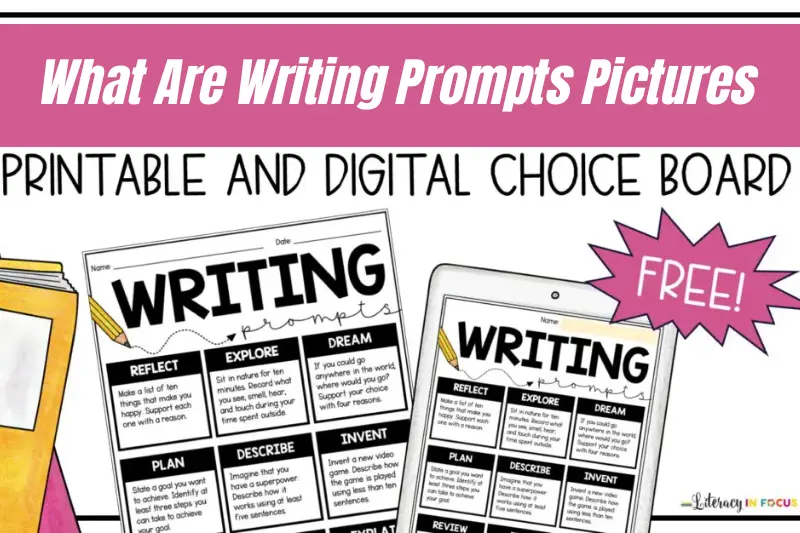
Writing prompts pictures are visual images designed to inspire ideas for storytelling, essays, or creative writing. Instead of starting with a blank page, writers use an image as a starting point and build a story, description, or scenario based on what they see.
These images can show anything from everyday life scenes to mysterious environments or emotional moments. The purpose is not just to describe the picture, but to interpret it creatively and turn it into a narrative. This is why picture prompts are widely used in education, content creation, and AI based writing tools.
In many cases, pictures for writing prompts help learners and writers think beyond literal meaning. A single image can lead to multiple interpretations, making it a flexible and powerful tool for creativity. For example, a simple image of an empty street at night can become a mystery story, a travel memory, or even a futuristic scene depending on the writer’s imagination.
With the rise of digital learning and AI generated content, writing prompt pictures have become even more important. They help bridge visual thinking with written expression, making it easier for both beginners and experienced creators to generate meaningful content quickly and effectively.
How Picture Prompts Improve Creativity
Picture based writing tools play a powerful role in developing creative thinking. When writers use picture prompts, they are not just describing what they see, but also interpreting meaning, emotion, and context behind the image. This process naturally trains the brain to think more deeply and creatively.
One of the biggest benefits of writing prompts pictures is that they help break writer’s block. Instead of struggling to find an idea, the visual gives an immediate starting point. A single image can lead to multiple story directions, allowing writers to explore different plots, characters, and emotions without limitation.
For students and beginners, pictures for writing prompts make learning more engaging. They encourage observation skills, imagination, and storytelling structure at the same time. Even a simple image can spark complex narratives when analyzed carefully.
In the world of AI and digital content creation, writing prompt pictures are also widely used to generate ideas for blogs, scripts, and storytelling models. They act as a bridge between visual input and written output, making creativity more accessible and consistent.
Understanding Inference Images in Writing
Inference images are visuals that require interpretation rather than direct description. Instead of showing everything clearly, they encourage the viewer to “read between the lines” and form meaning based on clues, context, and imagination. This makes them especially powerful in creative writing and storytelling exercises.
When writers use inference pictures, they are not simply stating what is visible. They are analyzing what might be happening, what came before the moment in the image, or what could happen next. For example, a picture of a broken window in an empty house could suggest mystery, conflict, or even a forgotten memory, depending on how it is interpreted.
These inference images are widely used in education and creative training because they improve critical thinking skills. They push learners to move beyond surface level observation and develop deeper narrative ideas. This is why they are often combined with writing prompts pictures to build stronger storytelling abilities.
In modern content creation and AI assisted writing, inference based visuals also help generate more meaningful outputs. By analyzing picture prompts with hidden context, creators can develop richer plots, stronger characters, and more engaging storylines.
How to Use Writing Prompt Pictures Effectively
Using writing prompt pictures effectively is not just about looking at an image and describing it. It is about building a structured creative process that turns visual input into meaningful writing output.
Start by observing the image carefully. Pay attention to small details such as expressions, objects, background elements, lighting, and mood. These details often hold the key to strong storytelling ideas when working with picture prompts.
Next, ask simple but powerful questions. What is happening in the scene? Who are the characters? What led to this moment, and what could happen next? This approach helps you move from basic observation to deeper interpretation, especially when using pictures for writing prompts.
After that, build a storyline around the image. You can choose any direction such as mystery, drama, fantasy, or real life storytelling. This flexibility is what makes writing prompts pictures so effective for both beginners and advanced writers.
Finally, add emotion and context. Even the simplest writing prompt pictures become more engaging when you include feelings, conflict, or purpose behind the scene. This step transforms a basic idea into a complete narrative.
Best Use Cases for Picture Based Writing Prompts
Picture prompts are widely used across different fields because they make idea generation faster, easier, and more creative. One of the most common use cases is in education, where teachers use writing prompts pictures to help students improve their storytelling, vocabulary, and comprehension skills. A single image can lead to multiple interpretations, making classroom discussions more interactive and engaging.
In content creation and blogging, pictures for writing prompts are used to overcome creative blocks and generate fresh ideas. Writers can quickly turn a visual scene into a blog post, story, or script, saving time while maintaining originality.
For AI and digital writing tools, writing prompt pictures play an important role in generating structured outputs. They help models and users connect visual cues with narrative patterns, improving the quality of generated content.
In creative writing practice, picture prompts are used to build imagination, character development, and plot building skills. Writers often use them as daily exercises to stay consistent and improve their storytelling ability.
Even in advanced storytelling and analysis, inference images are used to train critical thinking by encouraging deeper interpretation of hidden meanings and emotional context in visuals.
Common Mistakes to Avoid
While writing prompts pictures are a powerful tool for creativity, many writers and learners do not use them effectively. Avoiding common mistakes can significantly improve the quality of your storytelling and idea generation.
One frequent mistake is simply describing the image instead of creating a story. With picture prompts, the goal is not to list what you see but to build meaning, emotion, and narrative around it. A description of objects alone does not fully use the creative potential of pictures for writing prompts.
Another mistake is ignoring emotional depth. Many users focus only on visual elements and forget to add feelings, conflict, or motivation. Without emotion, even strong writing prompt pictures can feel flat and uninteresting.
Some writers also stick too closely to what is visible in inference images, limiting their imagination. These images are designed to encourage interpretation, so overthinking literal details can restrict creativity instead of expanding it.
Lastly, a common issue is rushing the process. Good storytelling takes time to develop ideas from writing prompts pictures, explore different directions, and refine the narrative.
Tips to Generate Better Writing Prompts from Pictures
To get the most out of writing prompts pictures, it helps to follow a few simple but effective techniques that improve both creativity and storytelling quality.
Start by focusing on key elements in the image such as the subject, setting, and mood. These details form the foundation of strong ideas when working with picture prompts. Even a small detail like lighting or body language can change the entire direction of a story.
Next, think beyond what is directly visible. Instead of only describing the scene, imagine what is happening before and after the moment shown. This is especially useful when working with pictures for writing prompts, as it encourages deeper narrative thinking.
Try combining logic with imagination. When analyzing inference images, ask yourself what hidden meaning or story the image might suggest. This helps you move from basic observation to creative interpretation.
It also helps to experiment with different genres. The same writing prompt pictures can be turned into mystery, fantasy, drama, or even science fiction stories depending on your perspective. This flexibility improves your storytelling range.
FAQs Section
What are writing prompts pictures
Writing prompts pictures are images used to inspire creative writing ideas. Instead of starting from a blank page, writers observe a visual scene and build a story, description, or concept based on it. These images help trigger imagination and improve storytelling skills.
How do picture prompts help in writing
Picture prompts help writers overcome creative blocks by giving them a visual starting point. They improve observation skills, encourage imagination, and make it easier to develop characters, plots, and settings in a natural way.
What are inference images used for
Inference images are used to develop deeper thinking and interpretation skills. They require the viewer to analyze hidden meaning, emotions, or context in a picture, making them useful for storytelling, education, and creative writing practice.
Conclusion
Writing prompts pictures are a simple yet powerful way to unlock creativity and improve storytelling skills. By using visual inspiration, writers can easily move from ideas to fully developed narratives without struggling to find a starting point.
Tools like picture prompts and pictures for writing prompts help transform ordinary visuals into meaningful stories, while inference images encourage deeper thinking and interpretation. Together, they create a strong foundation for imagination driven writing.
Whether you are a student, content creator, or AI enthusiast, practicing with writing prompt pictures regularly can significantly enhance your creativity, writing speed, and idea generation ability. Over time, these visual techniques make storytelling more natural, engaging, and effective.
